The Pro Se Paradox
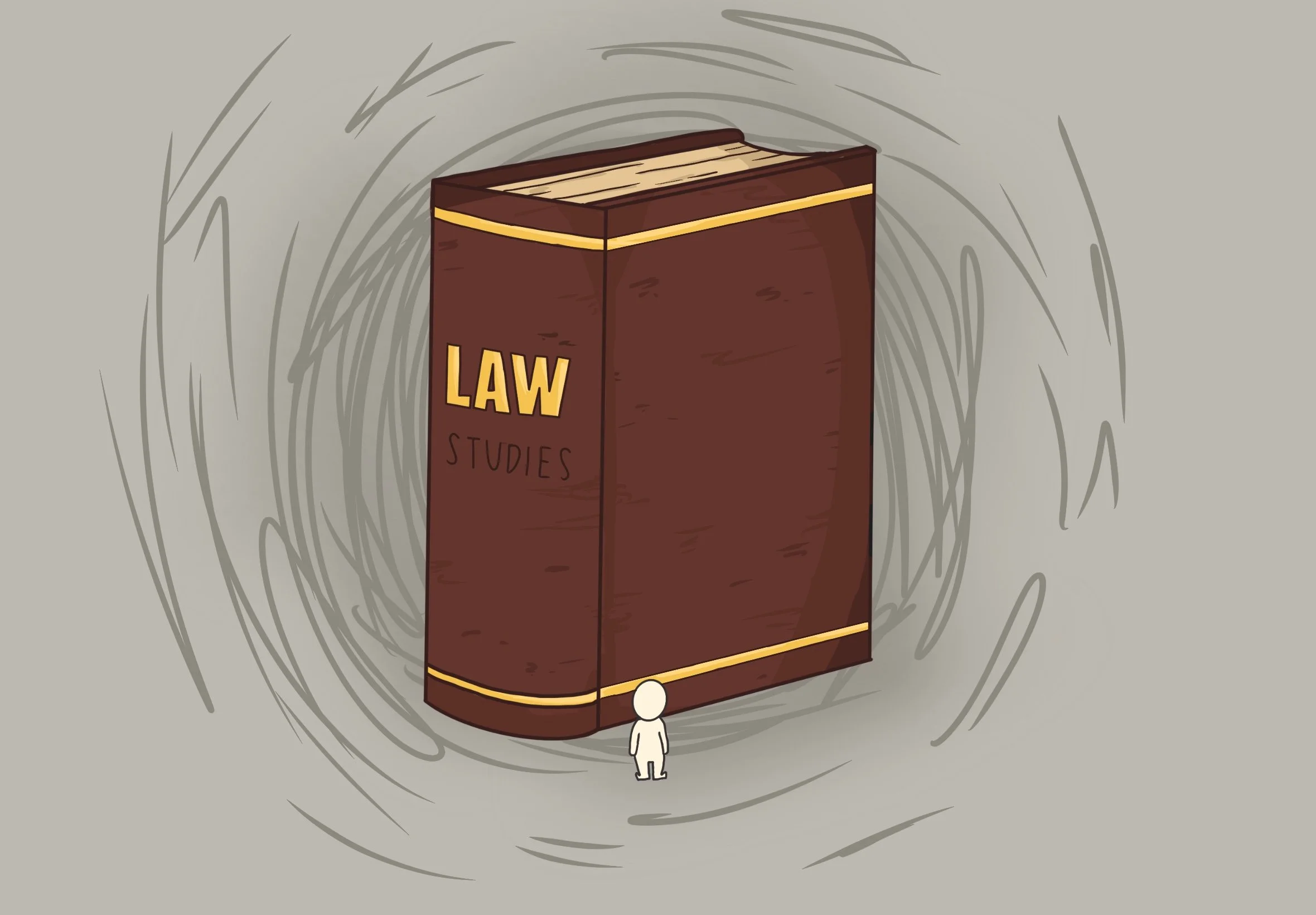
Article by: Marcus Castillo / Graphic by: Kailyn Mai
In the United States, people usually say that “access to justice” exists if you are allowed to walk into a courtroom. The rules state that anyone may stand before a judge without a lawyer. This right to speak for yourself - called pro se - gets pointed to as evidence that the courts are open to everyone. For low-income and marginalized people, however, representing yourself is seldom a real option. It only shows the contradiction inside the system; the doors are open on paper, but justice stays out of reach for anyone who lacks legal training.
The law guarantees the right to self-representation in criminal and civil cases alike. Courts still demand strict obedience to procedure and evidence rules, even when the person before them has never studied law. Judges must stay neutral; they cannot take anyone's side. While this setup looks fair on paper, it overlooks the plain fact that the rules were written for lawyers, not for ordinary people.
A courtroom feels hostile to anyone who appears without counsel. Complicated forms, hard deadlines, and technical wording knock cases off track long before a judge weighs the facts. Limited English, disability, or little schooling magnify every hurdle. In civil disputes over housing, debt, family matters, or public benefits, those who stand alone appear to lose far more often than those who have counsel.
The trouble is bigger than any one person's setback - it is baked into the structure. Courts assume lawyers will appear on each side. When a lone tenant meets a landlord's attorney or when a parent faces the government's lawyer, the mismatch is obvious. Judicial neutrality, vital though it is, can widen the gap by preventing judges from offering meaningful guidance to those who need it most.
The consequences are severe. A single missed step on a form or a missed deadline may cost someone a home, a child, benefits, or every dollar they have. Those losses widen the gap between rich and poor and leave people convinced the courts are rigged. Going to court without a lawyer is not a brave act of self-help; it is the hard proof that legal help costs too much and free help is too scarce.
Fixing this problem means rebuilding the system, not telling people to swim alone in deep water. Courts that guide visitors step by step, rules written in everyday words, more free lawyers, plus a guaranteed lawyer in eviction cases have all shown that fairness and speed can live together.
Justice is not real if the only test is whether the courthouse door is open. The real test is whether a person can walk in, speak, and be understood. Until the courts admit that people cannot carry the whole load alone, the promise of equal justice will stay empty for those who need it most.