Love Over Hate: A Look at Bad Bunny’s Halftime Show
Article by: Krubel Berhe / Graphic by: Naya Moukabary
Why does art fuel us? How is it able to light a spark within us that we didn’t know was there, or one we were aware of but chose to ignore? Why is it so prevalent in our society, and how is it the one thing that can bring us together? No art form better exemplifies this than music. Music binds us as a community better than anything on this planet. It’s how we understand and relate to one another. It’s a cornerstone of learning about the various people and cultures that live among us. It makes us happier than we can imagine; it brings out the darkest sides of us; it breathes new life into us; but most importantly, it fosters love and community, two things we need now more than ever. The latest Super Bowl Halftime Show, headlined by Bad Bunny, represented all of these qualities on the biggest stage in the world, so let's examine how it did that.
Safe to say it’s been a wild time to be alive as of late. ICE’s hold over our country has left us divided, with many living in fear that one day either themselves or their loved ones could be taken away in an instant. There are current attempts at creating detention centers for illegal immigrants, similar to a concentration camp. Along with that, peaceful protestors are being either killed or brutally beaten by ICE agents just for exercising their First Amendment rights. The occupation in Minneapolis is nothing short of inhumane and a sign of our leaders taking this country and giving it a turn for the worse. There’s such a heavy expansion of hate and animosity permeating throughout this country like a disease. Any attempt to break through that expansion with any sincerity or love is met with more vitriol. Despite our best attempts to fight back, it’s easy to feel as if everything you’re saying or doing isn’t amounting to anything. So, how does this apply to Bad Bunny’s Halftime Show?
After Kendrick Lamar’s Halftime Show last year was met with a lot of backlash, everyone’s eyes were set on who would take up the next halftime show. Would they pick a more traditional performance that conservatives were clamoring for, or go even further with the more progressive approach they had been committing to over the past couple of years? The latter came true on September 28th, 2025, when it was announced that Bad Bunny would be the next Super Bowl headliner. Once this was announced, the internet was flooded with mixed opinions. Many praised the NFL for striving to get culturally relevant artists and offer something new and interesting. On the other hand, others criticized them for having a mostly Latin-speaking artist perform on the biggest stage in the world. The announcement was so divisive that Turning Point held its own halftime show headlined by Kid Rock for conservatives in response to the announcement. As if he wasn’t in the limelight enough, the week before Bad Bunny was set to perform at the Super Bowl, he won Album of the Year at the Grammys, breaking records as the first Latino to win the award for a fully Spanish-language album. All eyes were on Bad Bunny ahead of Super Bowl LX, and when it came time for him to hit the stage on February 8th, he exceeded any expectations.
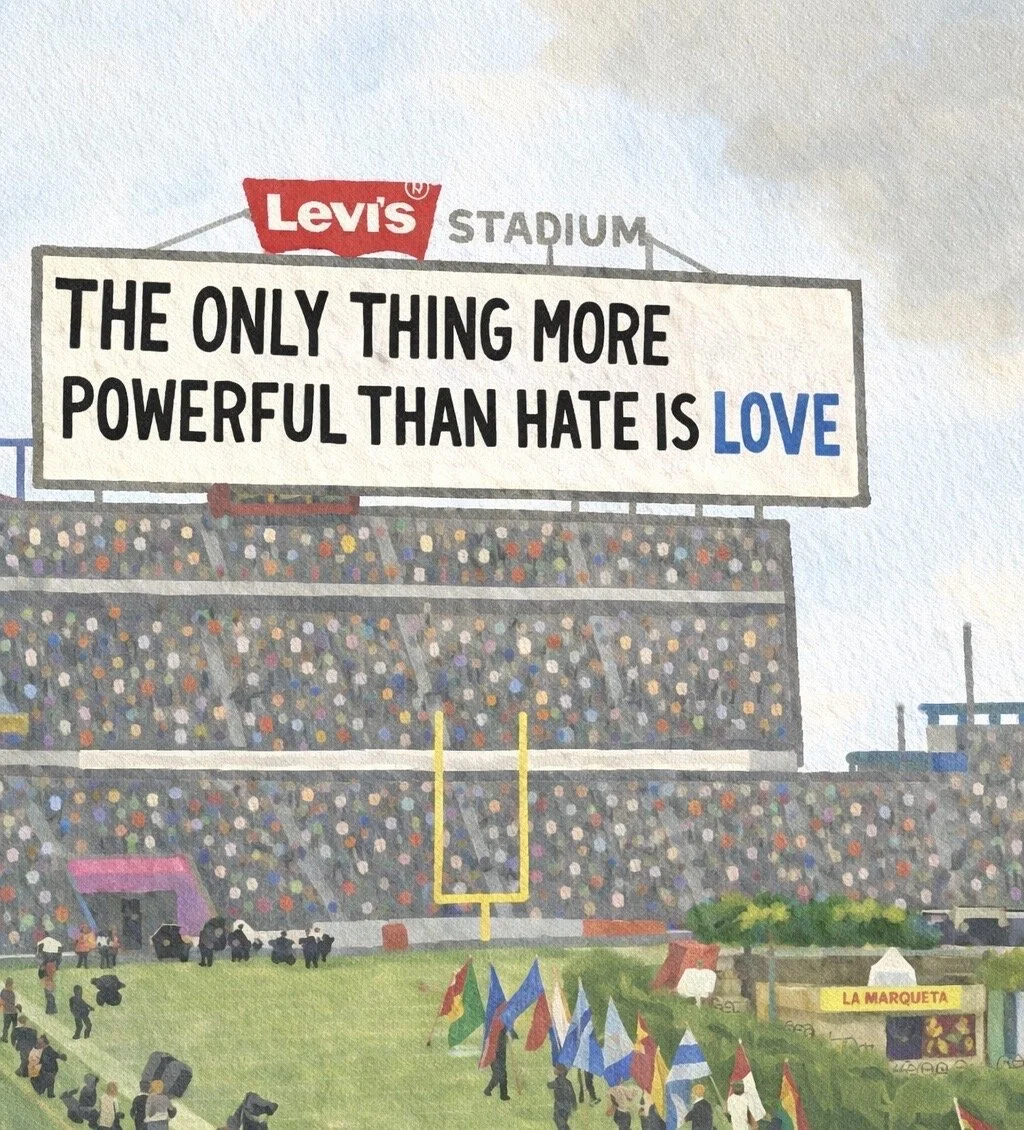
From the opening frame, Bad Bunny made it abundantly clear that this halftime show won’t be anything like what we’ve seen before. Once we see the sugarcane fields, the narrative and core themes of the performance are introduced: culture and community. These themes permeate throughout the performance, whether it be the heartfelt scene of old men playing cards or the stunning wedding setpiece that was real! Benito continues to throw new stuff at us, from having a segment filmed through a dolly shot to crashing through the roof of a house in the middle of the performance. No matter where you look, there’s always something exciting happening on screen. However, there’s one moment in particular that stands as a symbol of this performance’s heart: the scene where Bad Bunny gives the little boy his Grammy. That passing of the torch from one generation to another establishes how his wins aren’t for himself, but to represent and show love back to his community. This idea is also represented through the countless surprise artists that were a cornerstone of Bad Bunny’s childhood, such as Ricky Martin. The performance ends with Bad Bunny firmly reciting the names of all the countries in the Americas as their corresponding flags wave in the blissful wind, as the final message of the show appears on the billboard: The Only Thing More Powerful Than Hate Is Love.
This closing statement perfectly encapsulates the message of this performance. Through this performance, Bad Bunny reminds viewers what we’re fighting for: the ones we love and hold dear to our hearts. He’s trying to spread a message to the rest of the country to stay valiant and strong. To plant our feet where we stand and not to move them for anyone. There is no evil or power greater than community. It nourishes us, binds us, defines us, and makes us stronger. Times may seem bleak, but we will get through these dark times together. Continue to fight, continue to love, for what other way is there to live?